








What are Prescription Drugs?
Prescription drugs are medications that can only be obtained with a prescription from a licensed healthcare professional, such as a doctor or nurse practitioner. These drugs are regulated because they often require careful supervision, monitoring, and specific instructions for use due to their potential for side effects or misuse.
To obtain prescription drugs, individuals need a written or electronic prescription from a qualified healthcare provider. The prescription typically includes details such as the patient’s name, the specific medication and dosage, instructions for use, and the prescribing healthcare professional’s information.
Prescription drugs cover a wide range of therapeutic categories. They are used to treat various medical conditions, including but not limited to infections, chronic diseases, mental health disorders, and pain management. The controlled distribution of prescription drugs helps ensure proper usage and reduces the risk of adverse effects or abuse. Individuals must follow their healthcare provider’s instructions and not share prescription medications with others.
When A Prescription Becomes A Dependence
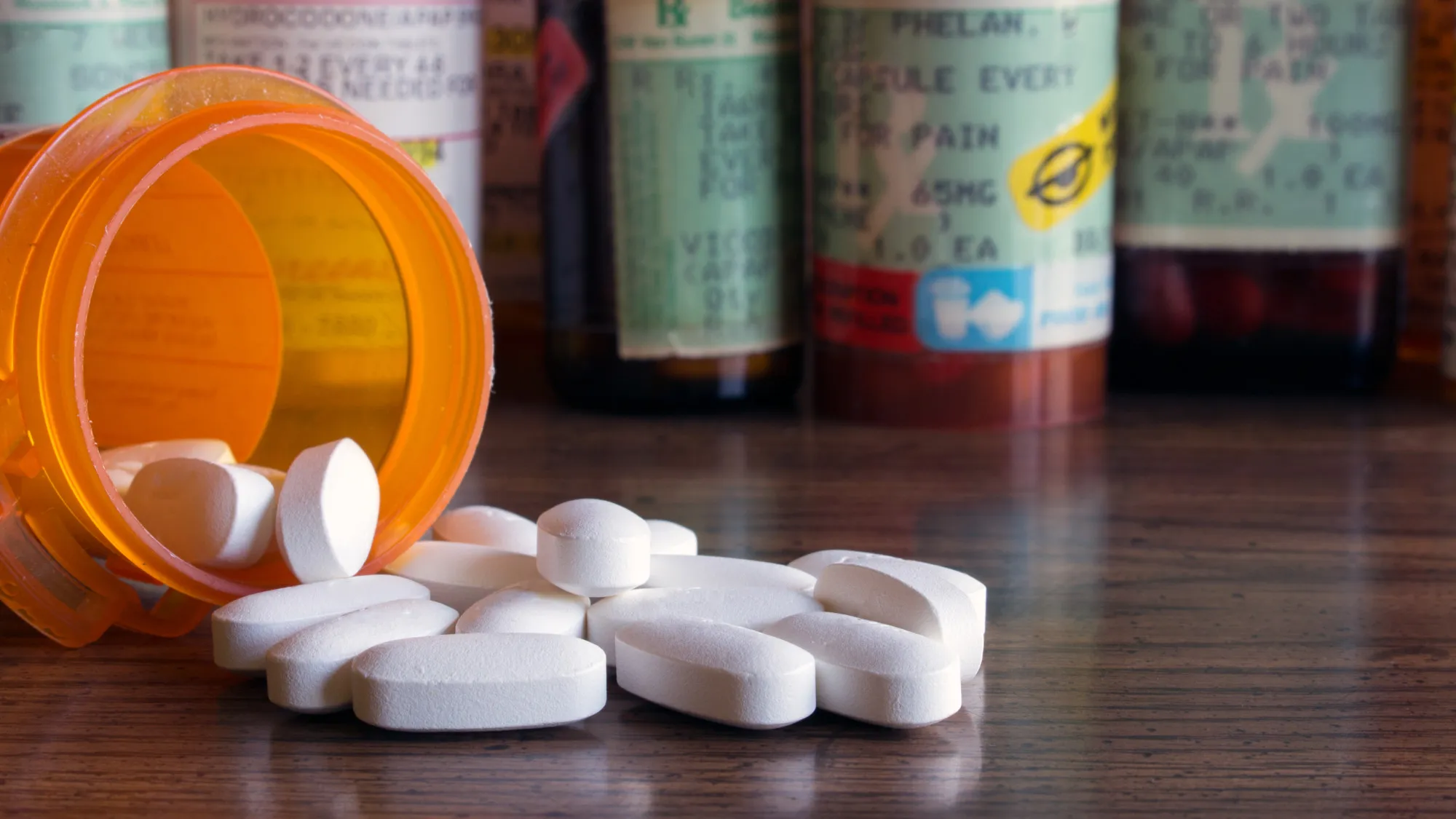
Most men we treat for prescription drug addiction never set out to misuse anything. It started with a legitimate prescription, for pain after surgery or injury, for anxiety or sleep, or for focus, and somewhere along the way the body adapted, the dose stopped working, and stopping became harder than expected. Prescription drug misuse is one of California’s most persistent addiction problems, driven in large part by the overprescription of opioid painkillers, and it affects men from every background and profession.
That is not a moral failing, and it does not make you the kind of person you picture when you hear the word “addict.” Prescription medications change brain chemistry whether they come from a doctor or not. Recognizing that the prescription has become a dependence, and that you cannot simply stop, is the first real step, and it is the reason treatment exists.
Signs Of Prescription Drug Addiction
The signs of prescription drug addiction are easy to miss when the medication started as something a doctor prescribed. Dependence tends to build quietly, and most men notice the pattern only once stopping has become hard. Common signs of painkiller, sedative, or stimulant dependence include:
- Needing higher doses to get the same effect, as tolerance builds
- Taking the medication more often, or differently, than prescribed
- Running out early, or visiting more than one doctor to keep a supply
- Anxiety or dread at the thought of being without it
- Using it to cope with stress, sleep, or emotion rather than the original symptom
- Failed attempts to cut back, and withdrawal symptoms when you do
If several of these sound familiar, the prescription has likely crossed into dependence. That does not mean you did anything wrong, but it does mean stopping safely needs medical support rather than willpower alone.
The Prescription Drugs We Treat
Prescription drug addiction is not one condition. It spans three different classes of medication, and each withdraws and is treated differently. The right treatment depends on which one you are dependent on.
Prescription Opioids And Painkillers
Opioid painkillers like oxycodone (OxyContin, Percocet), hydrocodone (Vicodin), and morphine are among the most addictive prescription drugs, and they are the most common path from a prescription to dependence, and sometimes to heroin or fentanyl. Withdrawal is severe, and treatment usually involves medically supervised detox and medication-assisted treatment. We cover this fully on our opioid treatment page.
Prescription Sedatives And Benzodiazepines
Anxiety and sleep medications like Xanax, Klonopin, Ativan, and Valium cause physical dependence that can be dangerous to stop suddenly, because benzodiazepine withdrawal can cause seizures. Treatment requires a medically supervised taper, never an abrupt stop. Our benzodiazepine treatment page covers this in detail.
Prescription Stimulants
Stimulants like Adderall and Ritalin, prescribed for ADHD, are often misused for focus or energy and can lead to dependence with serious physical and psychological effects. Treatment is behavioral rather than medication-based. Our stimulant treatment page covers how we treat it.

When Prescription Drugs Become Street Drugs
Prescription opioid addiction is the most common on-ramp to heroin and fentanyl. When a painkiller prescription runs out but the dependence does not, many men turn to stronger, cheaper street opioids, and today those are almost always contaminated with fentanyl. What began as a legitimate prescription can end as an opioid use disorder that is far more dangerous than where it started.
This is why prescription drug addiction is worth treating early, before it escalates. Catching dependence at the prescription stage, rather than after it has moved to street drugs, is one of the clearest paths to lasting recovery. If your use has already moved beyond prescriptions, our opioid treatment, heroin rehab, and fentanyl programs treat the full continuum.
How Prescription Drug Treatment Works
Prescription dependence almost always has a reason underneath it, and treating the dependence without treating that reason rarely lasts. The pain that led to the painkillers, the anxiety behind the benzodiazepines, the depression or attention struggles behind the stimulants, these do not disappear when the medication stops.
Our dual diagnosis care treats the underlying condition alongside the addiction. Cognitive Behavioral Therapy, group and family therapy, and experiential work help you build a life that does not depend on the medication, while our clinical team addresses the pain, anxiety, or mental health condition that the prescription was meant to manage in the first place.
Treating Why It Started
Because the three classes differ, treatment at Santa Barbara Recovery starts with an assessment to determine exactly what you are dependent on and what stopping safely requires. From there, the path is built around the drug.
For opioids and benzodiazepines, treatment begins with medically supervised detox, because stopping either one without medical support can be dangerous. Opioid recovery uses medication-assisted treatment to manage cravings; benzodiazepine recovery uses a gradual taper. For stimulants, where withdrawal is psychological rather than physically dangerous, treatment focuses on behavioral therapy from the start.
From detox or intake, every man moves through the same continuum of care: residential treatment, then Partial Hospitalization and Intensive Outpatient as he stabilizes, then outpatient care and sober living. Whatever the drug, the goal is the same: off it safely, and staying off it.

Insurance And Cost
We work with all major insurance providers, and most commercial plans cover prescription drug addiction treatment. Verify your benefits with us and we will tell you what is covered, quickly and confidentially, before you commit to anything.
Most plans cover medically supervised detox, residential treatment, and the outpatient care that follows. If you do not have insurance or it falls short, private pay and scholarship options exist. Call and we will walk through what is realistic for your situation.
Frequently Asked Questions
Can you be addicted to a drug your doctor prescribed?
Yes. Physical dependence and addiction can develop even when a medication is taken as prescribed, especially with opioids and benzodiazepines. It does not mean you did anything wrong; it means the medication changed how your body and brain function, and stopping needs medical support.
Which prescription drugs are the most addictive?
Opioid painkillers and benzodiazepines carry the highest risk of physical dependence, and both can be dangerous to stop suddenly. Prescription stimulants like Adderall are also addictive, though their withdrawal is psychological rather than physically dangerous.
Do I need to detox from prescription drugs?
It depends on the drug. Opioids and benzodiazepines usually require medically supervised detox, because stopping them abruptly can be dangerous. Stimulants generally do not require medical detox. An assessment determines what you need.
Is it safe to just stop taking them?
Not always. Stopping benzodiazepines suddenly can cause seizures, and stopping opioids brings severe withdrawal that often drives relapse. This is why prescription drug treatment starts with a medical assessment rather than quitting alone.
What if I still have pain or anxiety the medication was treating?
That is exactly what treatment addresses. We treat the underlying pain, anxiety, or condition alongside the addiction, so you are not left choosing between dependence and the problem the prescription was meant to solve.
Does insurance cover prescription drug treatment?
Yes. We work with all major insurance providers, and most plans cover detox, residential treatment, and outpatient care. We verify your benefits in minutes.
Is treatment only for men?
Yes. Santa Barbara Recovery is a men’s-only program, built entirely around men in recovery.
How do I start?
Call (805) 429-1203 or verify your insurance online. Admissions is open 24 hours a day, and we will guide you through every step.
Stop Depending On The Prescription. Start Today.
The prescription was supposed to help, and now it has become the problem. You do not have to figure out how to stop on your own, and with some of these medications, stopping alone is dangerous. We will assess what you need, get you off the medication safely, and treat what it was masking. Call (805) 429-1203.
Medically Reviewed By
Dr. Courtney Scott, MD — Medical Director, board-eligible in Addiction Medicine.
This page was reviewed for clinical accuracy against current American Society of Addiction Medicine (ASAM) guidelines, SAMHSA practice standards, and the National Institute on Drug Abuse.
Dr. Scott oversees medical care and clinical quality at Santa Barbara Recovery.
Hear From Men Who Found Recovery Here
The men who came through our program tell it better than we can. These are real stories of getting sober and staying sober at Santa Barbara Recovery.
Stop Depending On The Prescription. Start Today.
The prescription was supposed to help, and now it has become the problem. You do not have to figure out how to stop on your own, and with some of these medications, stopping alone is dangerous. We will assess what you need, get you off the medication safely, and treat what it was masking. Call (805) 429-1203.

Medically Reviewed By
Dr. Courtney Scott, MD — Medical Director, board-eligible in Addiction Medicine.
This page was reviewed for clinical accuracy against current American Society of Addiction Medicine (ASAM) guidelines, SAMHSA practice standards, and the National Institute on Drug Abuse.
Dr. Scott oversees medical care and clinical quality at Santa Barbara Recovery.