




Yes, delta-8 THC will likely trigger a positive drug test. When your body metabolizes delta-8, it converts into THC-COOH, the identical metabolite produced by delta-9 THC. Standard urine immunoassays cross-react with delta-8 metabolites at nearly 100% rates, and these screenings can’t distinguish between the two isomers. Detection windows range from 24-72 hours for occasional users to over 30 days for chronic consumers. Understanding the specific factors affecting your clearance timeline can help you assess your individual risk.
Yes, delta-8 THC will likely trigger a positive drug test. When your body metabolizes delta-8, it converts into THC-COOH, the same metabolite produced by delta-9 THC. Standard urine immunoassays cross-react with delta-8 metabolites at nearly 100% rates, and these screenings cannot distinguish between the two isomers, which is why delta 8 vs delta 9 detection time is functionally similar in most testing scenarios. Detection windows typically range from 24, 72 hours for occasional users to more than 30 days for chronic consumers. Understanding the specific factors that influence your clearance timeline can help you better assess individual testing risk.
Yes, Delta-8 Will Likely Trigger a Positive Drug Test
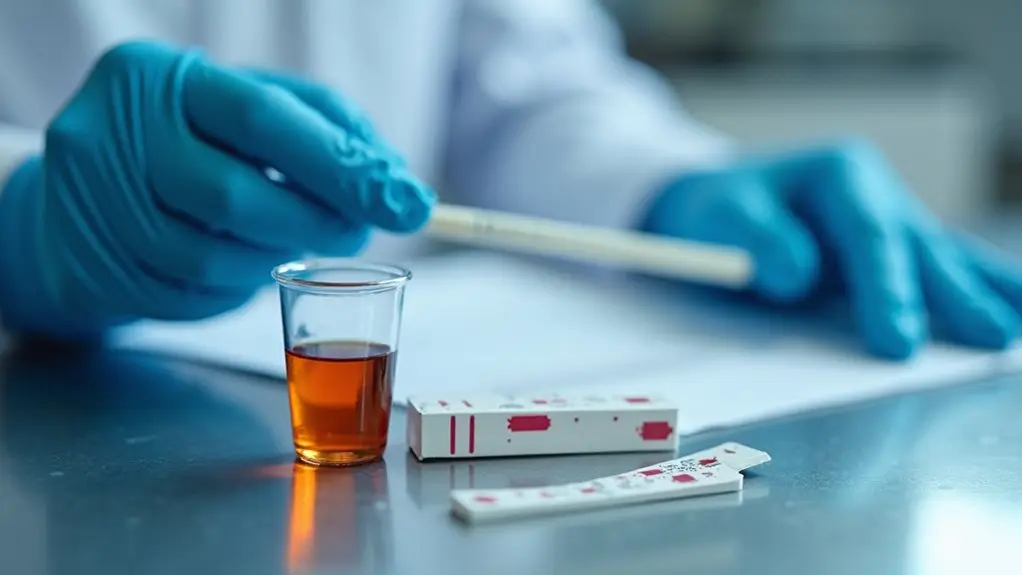
When you consume delta-8 THC, your body metabolizes it into THC-COOH, the same class of carboxy metabolites that standard drug tests detect. Urine immunoassays cross-react with delta-8 metabolites at nearly 100% rates, making distinction from delta-9 impossible at the screening level.
Your urine drug screen measures THC-COOH concentrations against standard cutoffs, typically 50 ng/mL. Delta-8’s primary metabolite, carboxy-delta-8-THC, triggers positive results regardless of the cannabinoid’s legal status in your state. The structural difference between delta-8 and delta-9 THC involves only the location of their double bond, which explains why both compounds produce similar metabolites. These metabolites can remain detectable in urine for up to a month after your last use.
If you test positive initially, confirmatory testing via GC-MS or LC-MS follows. While these methods can theoretically distinguish delta-8 from delta-9 metabolites, most laboratories don’t report this differentiation. Additionally, unregulated delta-8 products frequently contain trace delta-9 THC, further increasing your positive result risk.
Why Drug Tests Can’t Tell Delta-8 and Delta-9 Apart
Delta-8 and delta-9 THC share the identical molecular formula C21H30O2, differing only in the placement of a single double bond along their carbon chains. This subtle structural variation becomes irrelevant during metabolism because both compounds break down into the same primary metabolite: 11-nor-9-carboxy-Δ9-tetrahydrocannabinol (THC-COOH).
Delta-8 and delta-9 THC share identical molecular formulas, their metabolic pathways converge into the same detectable compound.
Standard immunoassay screenings target THC-COOH exclusively, which explains why does delta 8 test positive on routine panels. Can drug tests detect delta 8 specifically? No, current testing protocols lack isomer specificity. While delta-8 THC binds to CB1 receptors less strongly than delta-9 THC and produces milder psychoactive effects, this distinction has no bearing on metabolite detection. Both cannabinoids interact with the endocannabinoid system in ways that produce similar metabolic byproducts regardless of their differing potency levels.
- Both isomers metabolize into identical THC-COOH biomarkers
- Immunoassay technology reacts comparably to metabolites from either compound
- Even confirmatory GC-MS testing rarely distinguishes between isomer sources
Your delta 8 drug test results will reflect THC-COOH concentrations, not the original cannabinoid consumed.
How Long Delta-8 Stays Detectable in Urine

Your detection window depends primarily on usage frequency, ranging from 1-3 days for occasional use to 30+ days for chronic heavy consumption. THC-COOH metabolites accumulate in adipose tissue with repeated exposure, extending elimination half-life and prolonging positive test results at standard 50 ng/mL cutoffs. Individual factors including metabolic rate, body fat percentage, and test sensitivity thresholds directly influence how long delta-8 metabolites remain detectable in your urine. Consuming delta-8 through edibles or other oral methods may result in slightly longer detection times compared to smoking or vaping. Products marketed as detox solutions or cleansers are generally ineffective and won’t help you pass a drug test faster.
Occasional Use Detection Windows
How long does delta-8 remain detectable in your urine after occasional use? For infrequent consumers, delta-8-THC-COOH metabolites typically clear within 24-72 hours. However, does delta 8 test positive for THC during this window? Yes, standard immunoassay testing cross-reacts with delta-8 metabolites, triggering positive results on SAMHSA panels.
Your detection timeline depends on several metabolite-related factors:
- Metabolic rate: Faster metabolism accelerates delta-8-THC-COOH elimination from adipose tissue
- Dosage consumed: Single-use scenarios show approximately 3-day detection windows versus extended periods with higher doses
- Body composition: Higher fat percentages retain lipophilic metabolites longer
Standard urine immunoassays can’t differentiate between delta-8 and delta-9 sources. Both cannabinoids produce structurally similar metabolites that trigger identical positive responses on routine screening panels. This cross-reactivity occurs because delta-8 and delta-9 have nearly identical chemical structures, differing only in the placement of one double bond. Specialized analytical methods such as liquid chromatography-mass spectrometry are required to definitively distinguish between delta-8 and delta-9-THC exposure when confirmation testing is needed.
Heavy Use Timeline
Consistently heavy delta-8 consumption dramatically extends urine detection windows compared to occasional use. When you consume delta-8 multiple times daily, THC-COOH metabolites accumulate in adipose tissue, creating detection periods exceeding 30 days. Research confirms average detection at 14 days using 20 ng/mL cutoffs, with maximum elimination times reaching 433.5 hours in chronic users.
Understanding metabolite persistence factors explains why does delta 8 show up as THC on standard screenings. Delta-8’s 30-minute half-life deceives users, its fat-soluble metabolites linger far longer. Carboxy-delta-8-THC remains abundant in urine weeks after cessation in heavy consumers. Since delta 8 binds to fat cells, individuals with higher body fat percentages may experience even longer detection windows. Those with faster metabolisms process and eliminate THC more quickly, potentially shortening their personal detection timeline.
Does delta 8 fail drug test protocols? Controlled studies show no detection beyond 21 days at standardized cutoffs, though extreme cases extend to 30 days. Your individual metabolism, body composition, and dosing frequency determine precise clearance timelines.
Factors Affecting Retention
Several biological and behavioral variables determine how long delta-8-THC-COOH remains detectable in your urine. Understanding these factors helps explain why will delta 8 test positive results vary remarkably between individuals.
Your body composition plays a critical role since delta-8-THC accumulates in adipose tissue. Higher body fat percentages correlate with extended retention times, while leaner individuals typically clear metabolites faster. Given that the estimated half-life is 24-36 hours, it typically takes several days for the substance to be substantially eliminated from your body.
Three primary factors influence whether does delta 8 show up on drug test results:
- Metabolic rate and organ function, Efficient liver metabolism and kidney filtration accelerate delta-8-THC-COOH elimination from your system.
- Usage frequency and dosage, Chronic consumption causes metabolite accumulation, extending detection windows to 30-60 days post-cessation.
- Test sensitivity thresholds, Lower cutoff levels (20 ng/mL versus 50 ng/mL) detect metabolites for noticeably longer periods.
Delta-8 Detection Times for Blood, Saliva, and Hair Tests
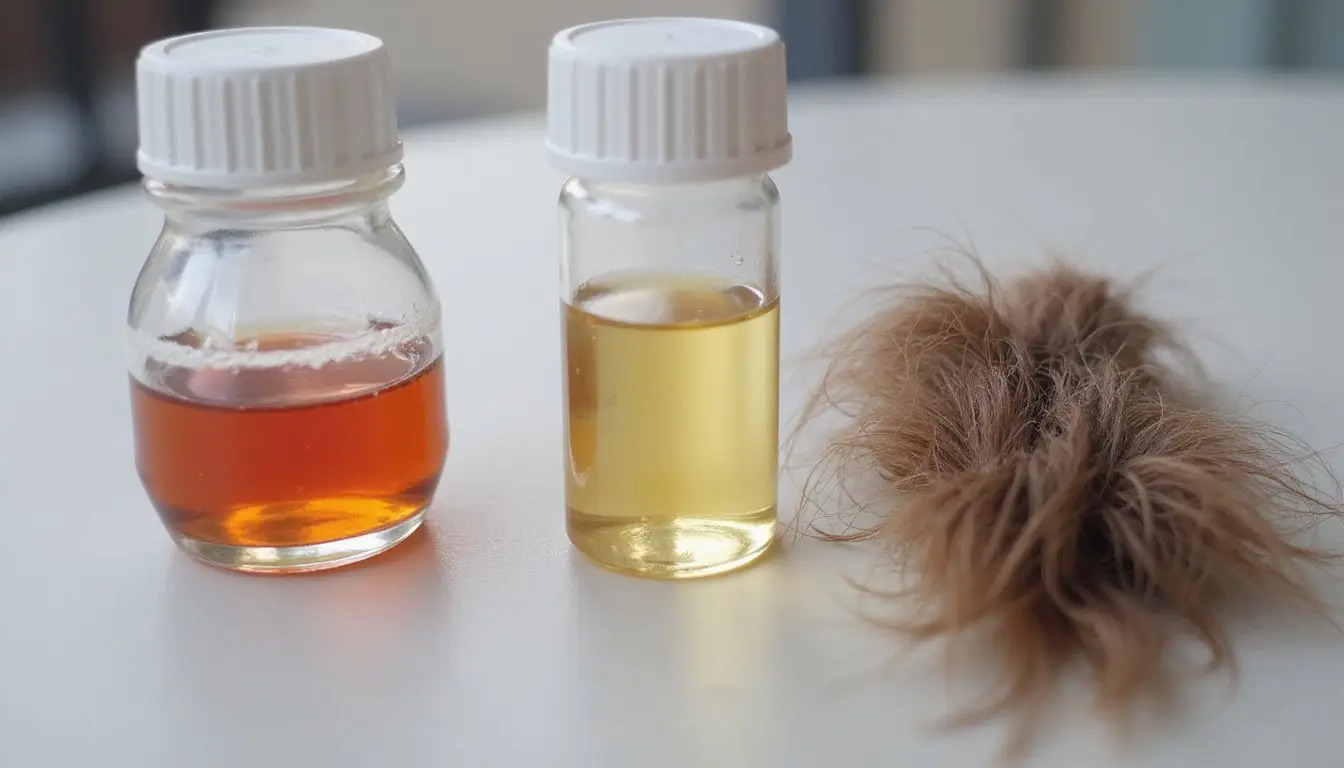
Different drug testing methods detect delta-8 THC metabolites across varying timeframes, each offering distinct windows of detectability based on biological matrix and usage patterns.
Blood tests detect delta-8 THC for 12, 48 hours post-consumption, primarily reflecting recent use. Occasional users show detectability up to 2 days, while heavy users may test positive for extended periods.
Blood tests reveal delta-8 THC for up to 48 hours, making them ideal for detecting recent consumption.
Saliva tests identify THC metabolites within 1, 3 days. Single-use scenarios typically yield positive results for 24 hours, whereas chronic users demonstrate detection windows extending to 72 hours.
Hair follicle analysis provides the longest detection window, up to 90 days. Metabolites deposit into hair shafts over time, capturing extended usage history. However, this method remains uncommon for routine delta-8 screening.
All three testing matrices cross-react with delta-8 metabolites, producing THC-positive results regardless of the cannabinoid’s legal classification. Individuals with higher body fat percentages may retain delta-8 metabolites longer, potentially extending detection windows across all test types. Excess fluid ingestion can produce false-negative urine test results, potentially affecting the accuracy of detection across testing scenarios.
Body Fat, Dose, and Metabolism: What Affects Detection Time
Your body fat percentage directly influences how long delta-8 metabolites remain detectable, since THC-COOH and related compounds accumulate in adipose tissue and release slowly into your bloodstream over time. The dose you consume and your frequency of use compound this effect, higher doses and chronic consumption saturate fat cells, creating extended detection windows that don’t scale linearly with intake. Daily or multiple weekly consumption can result in a prolonged presence of the compound in the system compared to occasional users. Your individual metabolic rate then determines how efficiently your liver processes these stored metabolites, meaning two people with identical usage patterns can show vastly different clearance timelines. Interestingly, repeated THC exposure leads to downregulation of CB1 receptors, which may influence how your body processes and stores cannabinoid compounds over time.
How Body Fat Matters
Because THC is a fat-soluble compound, it binds directly to adipose tissue rather than remaining in the bloodstream for rapid elimination. Your body composition drastically influences how long delta-8 metabolites persist in detectable concentrations. Higher body fat percentages correlate with extended retention periods, as adipose cells sequester THC metabolites and release them gradually during lipolysis.
Key factors affecting fat-related detection:
- Individuals with elevated body fat concentrations metabolize cannabinoids more slowly than those with leaner compositions
- Fat cells function as reservoirs, storing THC and prolonging metabolite excretion timelines
- Weight fluctuations can trigger stored metabolite release, potentially affecting test results weeks after consumption
Your metabolic rate compounds these effects, slower metabolism combined with higher adiposity creates conditions for maximum detection window extension.
Dosage and Frequency Impact
How noticeably does your delta-8 intake affect detection outcomes? Your dosage and consumption frequency directly determine metabolite accumulation levels. Higher doses generate more Δ8-THC-COOH, extending the period these metabolites exceed standard 50 ng/mL cutoffs. Heavy dosing patterns mirror chronic delta-9 profiles, keeping metabolites detectable for 30+ days.
| Usage Pattern | Urine Detection | Key Factor |
|---|---|---|
| Single low dose | 2-3 days | Minimal accumulation |
| Occasional use | 1-7 days | Rapid clearance |
| Regular use | Up to 30 days | Steady buildup |
| Frequent heavy | 30-60 days | Significant accumulation |
| Chronic daily | 60-90 days | Maximum saturation |
You’ll find that frequency compounds the effect, daily consumption prevents complete metabolite clearance between sessions, causing progressive accumulation that triggers positive immunoassay results weeks after cessation.
Metabolism Rate Variations
While dosage and frequency establish baseline metabolite levels, your body’s individual metabolic characteristics determine how rapidly Δ8-THC-COOH clears from your system. Your hepatic CYP450 enzyme activity, particularly CYP2C9 and CYP3A4, dictates hydroxylation efficiency at the 7 and 11 positions, directly influencing metabolite conversion rates.
Three primary factors modulate your Δ8-THC elimination kinetics:
- Body fat percentage: Higher adipose tissue provides expanded storage reservoirs for lipophilic metabolites, prolonging release into circulation
- Basal metabolic rate: Accelerated metabolism correlates with faster enzymatic processing and shorter detection windows
- Hepatic function: Ideal liver microsomal activity enables efficient polar metabolite conversion for urinary excretion
Genetic polymorphisms in CYP450 enzymes create interindividual variability in hydroxylation efficiency. You’ll retain detectable metabolite concentrations longer if you possess slower enzyme variants or compromised organ function.
Can Confirmatory Lab Tests Prove It Was Delta-8?
Most confirmatory laboratory tests can technically distinguish between delta-8 and delta-9 THC metabolites at the molecular level, but this capability rarely translates into practical differentiation on your test results. Gas chromatography-mass spectrometry and liquid chromatography-mass spectrometry possess the analytical capacity to identify each isomer’s unique metabolite structure. However, laboratories must specifically implement delta-8 detection protocols and choose to report the distinction separately.
Standard confirmatory procedures were developed for delta-9 THC detection, meaning delta-8 protocols remain inconsistently applied across testing facilities. Research indicates delta-8-THC can be falsely identified as delta-9-THC in forensic settings, with 3.7% of seized DUI materials showing misidentification. Unless the laboratory actively reports delta-8 carboxy-THC separately from delta-9 carboxy-THC, your confirmatory results won’t prove which cannabinoid you consumed.
Will Employers Accept Delta-8 as an Excuse?
Even if you legally purchased delta-8 products in your state, most employers won’t accept this as justification for a positive THC metabolite result. Zero-tolerance workplace drug policies focus exclusively on the presence of THC-COOH in your system, not on the specific cannabinoid source that produced it. Your employer’s testing protocol detects metabolites without distinguishing between delta-8 and delta-9 THC, making the legal status of your purchase irrelevant to employment consequences.
Legal Status Doesn’t Matter
Although delta-8 THC products may be legal in your state, employers don’t distinguish between legal cannabinoids and controlled substances when reviewing drug test results. Federal workplace testing protocols and company zero-tolerance policies override state-level legality. Your positive result triggers identical consequences regardless of the THC isomer’s source.
Confirmatory tests like GC-MS can differentiate delta-8-THC-COOH from delta-9 metabolites, but most laboratories report findings generically as “THC positive.” This reporting practice eliminates your ability to claim legal delta-8 use as a defense.
Key factors that nullify legal status arguments:
- Immunoassays detect THC-COOH metabolites without isomer specification
- Employers enforce THC bans irrespective of cannabinoid origin
- Confirmatory results prompt disciplinary action without distinguishing isomers
Your delta-8 consumption creates measurable metabolites that standard protocols flag identically to delta-9 THC. The effects of delta-8 gummies can vary from person to person, leading to different experiences and preferences. Many users report a smoother, more calming effect compared to traditional delta-9 THC products, making delta-8 gummies a popular choice for those seeking relaxation without the heightened psychoactivity. Additionally, the legal status of delta-8 in various states has contributed to its increased availability and consumer interest.
Zero-Tolerance Policy Implications
Why would an employer differentiate between delta-8 and delta-9 THC when both compounds produce nearly identical metabolites that trigger the same immunoassay response? Standard workplace protocols detect THC-COOH without distinguishing the source cannabinoid.
| Testing Component | Delta-8 Detection | Employer Response |
|---|---|---|
| Immunoassay Screen | Cross-reacts positive | Treated as THC violation |
| Standard Confirmation | Reports THC-COOH present | No distinction made |
| Extended Analysis | Can differentiate metabolites | Rarely requested |
| Policy Enforcement | Legal status irrelevant | Zero-tolerance applied |
| Final Determination | Positive result stands | Employment consequences |
You can’t expect employers to request specialized confirmatory testing to validate your delta-8 claim. Most organizations apply zero-tolerance protocols uniformly, a positive THC metabolite result triggers identical consequences regardless of cannabinoid source. The National Drug Court Institute specifically recommends avoiding delta-8 if you’re subject to testing.
How to Estimate Your Personal Delta-8 Clearance Time
Because delta-8-THC metabolizes into compounds nearly identical to delta-9-THC byproducts, you’ll need to assess multiple biological variables to estimate your personal clearance timeline. Delta-8-THC-COOH, the primary metabolite detected in standard immunoassays, persists based on your consumption patterns and physiological characteristics.
Consider these key determinants when calculating your detection window:
- Usage frequency: Occasional users clear metabolites within 1-7 days, while chronic users retain detectable levels for 30-60 days due to metabolite accumulation.
- Body composition: Higher adipose tissue stores fat-soluble cannabinoids longer, extending release into circulation during metabolism.
- Test sensitivity thresholds: A 20 ng/mL cutoff detects metabolites extensively longer than standard 50 ng/mL screenings.
Your metabolic rate, liver function, and BMI collectively influence elimination kinetics. Individual variance remains substantial across these parameters.
Does Legal Delta-8 Protect You From Workplace Consequences?
How effectively does delta-8’s legal status shield you from workplace drug test consequences? The answer is straightforward: it doesn’t. Standard workplace screenings detect THC metabolites, not the specific cannabinoid you consumed. Since delta-8 and delta-9 THC produce identical carboxy-THC metabolites, your test results appear indistinguishable from marijuana use.
Employers receive legally defensible positive results that support their drug-use policies regardless of delta-8’s legal standing in your state. Claiming you used a legal hemp-derived product won’t overturn a metabolite-based positive. Testing protocols don’t differentiate between legal and illegal THC sources, they identify the presence of prohibited metabolites.
Additionally, many delta-8 products contain delta-9 THC impurities, compounding your risk. The National Drug Court Institute advises avoiding delta-8 entirely due to this gray area. Your workplace consequences remain the same whether you consumed legal delta-8 or illegal delta-9.
Facing a Drug Test After Using Delta-8? Your Options
Three primary variables determine your options when facing a drug test after delta-8 use: the time until testing, your consumption frequency, and the specific test methodology employed.
Your delta-8 test results hinge on three factors: timing, usage patterns, and which testing method gets used.
Your metabolite clearance timeline depends on these critical factors:
- Cessation timing: Occasional users eliminate THC-COOH metabolites within 1-3 days, while frequent users require 30-60 days for complete urinary clearance.
- Test selection awareness: Blood tests detect metabolites for only 12-48 hours, whereas urine immunoassays maintain detection windows spanning weeks.
- Confirmatory testing requests: GC-MS or LC-MS analysis can differentiate delta-8 from delta-9 metabolites when initial screens yield positive results.
You should consult the testing laboratory regarding specific cutoff thresholds. If you’ve tested positive, disclosing delta-8 consumption to the medical review officer may provide context for result interpretation.
Frequently Asked Questions
Can Secondhand Delta-8 Smoke Exposure Cause a Positive Drug Test Result?
You’re unlikely to test positive from secondhand delta-8 smoke exposure. While delta-8 metabolizes into THC-COOH, the same metabolite standard immunoassays detect, passive inhalation typically doesn’t produce sufficient concentrations to exceed cutoff thresholds (usually 50 ng/ml). Direct consumption reliably generates detectable metabolite levels, but no current research confirms secondhand exposure reaches these thresholds. However, prolonged exposure in poorly ventilated spaces could theoretically increase your risk, though documented cases remain absent.
Do Delta-8 Edibles Stay Detectable Longer Than Delta-8 Vapes or Flower?
Yes, delta-8 edibles typically remain detectable longer than vapes or flower. When you consume edibles, they undergo first-pass liver metabolism, converting delta-8 to 11-hydroxy-Δ8-THC and then Δ8-THC-COOH more slowly than inhalation methods. This prolonged absorption stores fat-soluble metabolites in adipose tissue, releasing them gradually. You’ll find occasional edible users test positive for 3-7 days versus 1-3 days for inhalation, with frequent users showing detection windows of 30-60 days.
Will CBD Products That Contain Trace Delta-8 Trigger a Positive Test?
Yes, CBD products containing trace delta-8 can trigger a positive test. Standard immunoassays cross-react with delta-8 metabolites, and your body converts even small amounts into THC-COOH, the same metabolite flagged for delta-9. Unregulated hemp-derived CBD often contains variable delta-8 or delta-9 contamination, amplifying detection risk. Quest Diagnostics confirms delta-8 in CBD interferes with both presumptive screens and confirmatory testing, as many labs report results simply as “THC positive.”
Can Drinking Water or Detox Drinks Help Pass a Delta-8 Drug Test?
Water dilution and detox drinks won’t reliably help you pass a delta-8 drug test. While excessive hydration temporarily lowers THC-COOH metabolite concentrations, labs detect diluted samples through abnormal creatinine levels and specific gravity measurements. Detox drinks claim to mask metabolites using diuretics and B-vitamins, but they lack scientific validation and provide only a brief 1-5 hour window. Your body fat percentage, metabolism rate, and usage frequency ultimately determine metabolite clearance, not these methods.
Are Home THC Test Kits Accurate for Detecting Delta-8 Use?
Home THC test kits detect delta-8 use with variable accuracy depending on the platform. Your body metabolizes delta-8 into carboxy-delta-8-THC, which shows 87-112% cross-reactivity with standard cannabinoid immunoassays at 50 ng/mL cutoffs. However, CEDIA and ROCHE platforms won’t detect delta-8 at typical concentrations. You’ll get presumptive positives on most kits because they can’t distinguish delta-8 metabolites from delta-9 metabolites without LC-MS/MS confirmation testing.