



The most effective relaxation techniques in 2025 are slow breathing protocols (six breaths per minute), which reduce systolic blood pressure by 4.7-9.5 mmHg through parasympathetic activation, and mindfulness meditation, which demonstrates measurable cardiovascular benefits and increased prefrontal cortex activity. Progressive muscle relaxation produces anxiety reduction comparable to cognitive behavioral therapy, while combined biofeedback approaches achieve 80-84% success rates for stress-related conditions. These evidence-backed methods offer specific physiological mechanisms you can leverage, and matching the right technique to your individual circumstances maximizes therapeutic outcomes.
Mindfulness Meditation: The Most Powerful Blood Pressure Reducer

While pharmaceutical interventions remain the cornerstone of hypertension management, mindfulness meditation has emerged as a clinically validated adjunct therapy with measurable cardiovascular benefits. Randomized controlled trials demonstrate systolic blood pressure reductions of 4.7-9.5 mmHg and diastolic decreases of 3.2-6.8 mmHg following structured interventions. You’ll benefit from an effective program structure comprising 8-week group-based sessions with daily practice, incorporating breath-focused meditation, body scans, and attention regulation training. The mechanism involves autonomic nervous system modulation, specifically enhanced parasympathetic activity and reduced sympathetic drive, inducing vasodilation and lowering heart rate. Neuroimaging confirms increased prefrontal cortex activity supporting emotional regulation. EEG analysis reveals increased theta and alpha power in frontal and parietal regions, reflecting enhanced relaxation and internalized attention during meditation practice. Sustained long-term effects include maintained systolic pressure reduction at six months post-intervention. Both hypertensive and non-hypertensive adults demonstrate clinically meaningful responses across diverse populations. Research shows that stress reduction programs in patients with elevated blood pressure produce systematic reductions in blood pressure levels. A recent study of over 200 adults with elevated blood pressure found that participants in a mindfulness program reduced sedentary time by 351 minutes per week compared to those receiving enhanced usual care.
Progressive Muscle Relaxation: Systematic Tension Release for Stress Relief
Although pharmaceutical and contemplative interventions dominate stress management protocols, progressive muscle relaxation (PMR) offers a distinct somatic approach grounded in proprioceptive awareness and voluntary neuromuscular control. You’ll systematically tense major muscle groups for five seconds, then release and observe the contrast for 10, 20 seconds, progressing from toes to head. This protocol activates neurological mechanisms involving both top-down cortical regulation and bottom-up proprioceptive feedback, shifting you from sympathetic arousal to parasympathetic dominance within minutes. Originally developed by Edmund Jacobson in the 1920s, the technique operates on the principle that physical relaxation directly facilitates mental calmness.
Clinical data demonstrate measurable reductions in blood pressure, heart rate, and cortisol levels following sessions. You’ll experience significant anxiety reduction comparable to cognitive behavioral therapy outcomes. Research has shown that PMR effectively alleviates test anxiety and depression in various populations, including nursing students experiencing academic stress. The technique may also enhance athletic performance by reducing pre-competition tension and improving muscle efficiency. Alternative applications include migraine management, chronic pain relief, and insomnia treatment. The 10, 20 minute full-body protocol requires no equipment, making it accessible for immediate stress mitigation across diverse settings.
Meditative Movement Practices: Yoga, Tai Chi, and Qigong for Mind-Body Health

When you combine meditative awareness with rhythmic physical movement, you engage neurobiological pathways that neither isolated exercise nor seated meditation fully activates. Yoga, tai chi, and qigong demonstrate statistically significant improvements in health-related quality of life across conditions including heart failure, diabetes, and chronic pain, with effect sizes ranging from 0.18 to 2.28 and percentile gains of 9.9% to 48.9%. Number needed to treat values between 2 and 10 indicate substantial clinical efficacy.
Moving meditation practices activate unique neural networks while delivering clinically meaningful health improvements across multiple chronic conditions.
Evidence-based outcomes include:
- Yoga prevalence doubled from 6% to 11% among U.S. workers between 2002 and 2012
- Tai chi shows particularly large effects for cardiovascular conditions with NNT of 2-3
- Qigong interventions yield 21.9% to 46.3% HRQOL improvements
However, adherence rates present challenges, dropout risk increases 2.54-fold compared to seated meditation, varying across demographics among practitioners. Research demonstrates that nearly 79% of quality-of-life outcomes showed statistically significant improvements across various meditative movement interventions, indicating robust effectiveness across diverse populations and health conditions. Studies show that even brief daily practice of 10 to 30 minutes can increase well-being and mindfulness scores while decreasing psychological distress within just two weeks. These practices can improve worker health while simultaneously increasing productivity and reducing employer costs through comprehensive workplace mindfulness-based intervention programs.
Breath Control Interventions: Harnessing Your Parasympathetic Nervous System
Slow breathing protocols demonstrate significant antihypertensive effects by activating your parasympathetic nervous system and reducing sympathetic overdrive. Evidence-based techniques include diaphragmatic breathing (belly breathing), pursed-lip breathing, and paced nostril breathing, each validated through controlled trials measuring blood pressure and heart rate variability. You’ll achieve ideal results with sessions lasting at least 5 minutes, performed at a slow, controlled pace rather than rapid breathing patterns that can paradoxthetically increase physiological arousal. A ten-session structured intervention combining diaphragmatic breathing with progressive muscle relaxation and guided imagery has demonstrated significant reductions in both somatic tension and trait anger in controlled trials. Systematic reviews analyzing 72 breathing interventions across clinical studies reveal that approximately three-quarters prove effective for reducing anxiety and stress when properly implemented. Breathwork interventions show particular promise when they comprise 50% or more of the therapeutic protocol, as supported by systematic review criteria for evaluating stress reduction outcomes.
Slow Breathing Reduces Hypertension
Controlled breathing at six breaths per minute produces measurable reductions in both systolic and diastolic blood pressure through direct modulation of autonomic nervous system activity. This technique enhances baroreflex sensitivity and increases respiratory sinus arrhythmia, creating cardiorespiratory resonance at approximately 0.1 Hz. You’ll experience immediate effects; systolic pressure drops up to 8.6 mmHg after just two minutes of practice.
The physiological mechanisms include:
- Parasympathetic activation shifts your autonomic balance toward relaxation, increasing heart rate variability and vagal tone
- Reduced arterial stiffness improves vascular compliance, lowering pulse wave velocity and cardiovascular risk factors
- Enhanced baroreflex function optimizes blood pressure regulation through stimulation of aortic and carotid stretch receptors
Sustained practice over several days yields average systolic reductions of 4.3, 11.7 mmHg, establishing slow breathing as an effective nonpharmacological intervention for hypertension management. Research reviews analyzing 20 different studies have documented consistent declines in both systolic and diastolic blood pressure from various breathing exercise protocols. The 4-4-8 breathing pattern, involving a 4-second inhalation, 4-second breath hold, and 8-second exhalation, demonstrates particular effectiveness in reducing systolic blood pressure by 5.8 mmHg after 30 minutes through prolonged parasympathetic stimulation. Device-guided slow breathing systems use audio tone patterns to direct inhalation and exhalation rhythms, progressively extending the exhale phase to achieve therapeutic breathing rates below normal resting frequency.
Popular Protocols and Techniques
Beyond slow breathing’s documented effects on blood pressure, a broader toolkit of breath control interventions targets parasympathetic nervous system activation through distinct physiological mechanisms. Box breathing (4-second inhale-hold-exhale cycles) enhances rhythmic stability and decreases heart rate. The 4-7-8 technique, inhaling for 4 seconds, holding for 7, exhaling for 8, boosts vagal tone through prolonged exhalation phases. Diaphragmatic breathing at 6, 8 breaths per minute optimizes emotional regulation via vagal activation. Coherent breathing employs equal 5-second inhale and exhale intervals to enhance heart rate variability and strengthen vagal tone. You’ll amplify these effects by combining breath work with sensory integration strategies: eye palming reduces visual input for 30, 60 seconds, while olfactory stimulation using lavender or eucalyptus oils synergistically lowers anxiety markers. Cold water facial immersion for 5, 10 seconds triggers the mammalian dive reflex, rapidly increasing parasympathetic dominance through innate neuroregulatory pathways.
Music and Guided Imagery: Audio-Assisted Relaxation Techniques
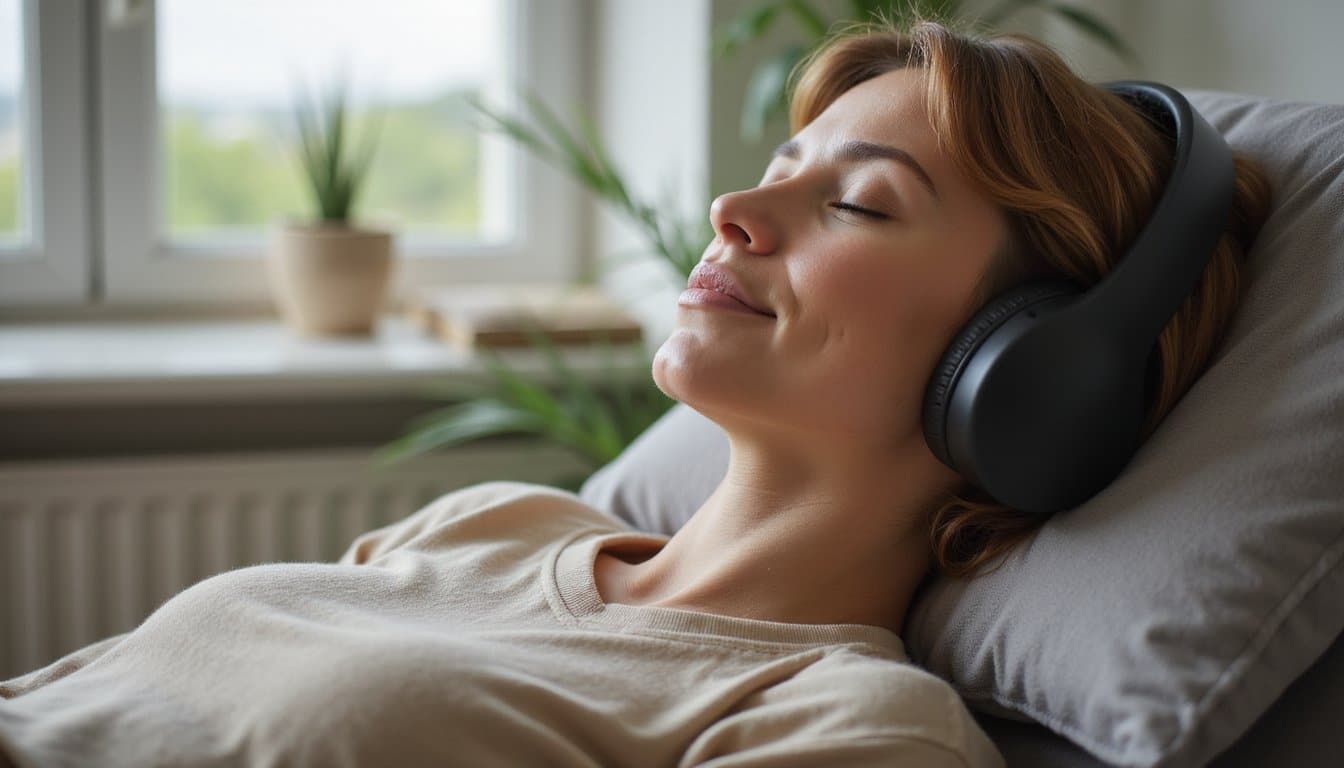
How can sound-based interventions systematically reduce stress and promote physiological calm? Audio-assisted relaxation techniques leverage neuromechanisms of therapeutic benefits through dopamine release and cortisol reduction. Music therapy and guided imagery regulate your autonomic nervous system, producing measurable decreases in muscle tension and stress hormones.
Evidence-based protocols include:
- 45-minute music sessions with 15-minute guided imagery delivered via standardized recordings over several weeks
- Specialized equipment like stress relief chairs and supportive mattresses to enhance physiological tension release
- Vocal improvisation, rhythmic activities, and pre-recorded soundscapes administered by trained therapists
Research demonstrates sustained improvements at 3 and 6-month follow-ups across diverse populations, from surgical patients to healthy adults. Community-based implementation strategies make these interventions accessible, with combination protocols showing synergistic effects for managing anxiety, depression, and poststroke mood disorders while maintaining treatment gains post-intervention.
Biofeedback and Combined Relaxation Approaches: Personalized Stress Management
While audio interventions provide passive stress reduction, biofeedback transforms relaxation therapy into an active learning process where you develop measurable control over your physiological responses. Sensors measuring skin conductance, heart rate, and respiration generate personalized graphical feedback, enabling real-time stress tracking and adjustment. This approach yields 45, 60% reductions in headache frequency, comparable to propranolol or amitriptyline without side effects.
| Intervention Type | Efficacy Rate |
|---|---|
| Biofeedback alone | 45, 60% reduction |
| Relaxation alone | 45, 60% reduction |
| Combined biofeedback + relaxation | 80, 84% success |
| Biofeedback + pharmaceutical | 70, 79% reduction |
Combining modalities, whether cognitive behavioral therapy, mindfulness, or medications, produces superior outcomes. Sensor selection optimization and custom data analysis approaches guarantee personalized training protocols. You’ll develop self-efficacy through measurable physiological control, decreasing helplessness while managing stress-related conditions effectively.
Choosing the Right Technique: Matching Methods to Your Needs and Lifestyle
Before selecting a relaxation technique, you should evaluate your current physical health and any movement limitations that might restrict certain practices. Individuals with musculoskeletal disorders or limited mobility can effectively practice deep breathing and guided imagery, while those with adequate balance and strength may benefit from yoga or Tai Chi. Your available time, access to instructors or apps, and preferred practice setting, whether solo or group-based, will further narrow appropriate options that fit sustainably into your daily routine.
Assess Your Physical Capabilities
Your physical capabilities directly influence which relaxation techniques will prove most effective and sustainable for your individual circumstances. A thorough physical assessment reveals mobility restrictions, chronic conditions, and balance issues that determine appropriate methods. If you’re bedridden or have limited range of motion, guided imagery and adapted progressive muscle relaxation offer viable alternatives to movement-based practices. Cognitive screening identifies processing abilities that affect technique selection, simple breathing exercises suit those with cognitive limitations better than complex mindfulness protocols requiring higher-order processing.
Consider these practical factors:
- Cardiovascular conditions may require medical clearance before moderate-exertion techniques like certain yoga forms
- Respiratory illnesses necessitate modified breathing methods to prevent symptom exacerbation
- Neuromuscular disorders and joint pain eliminate practices requiring physical movement, favoring mind-based approaches
Match evidence-backed techniques to your verified capabilities for ideal therapeutic outcomes.
Consider Time and Resources
How much time can you realistically dedicate to relaxation practice each day? Deep breathing exercises and mindfulness practices deliver measurable stress reduction in under five minutes, activating your parasympathetic nervous system efficiently. Progressive muscle relaxation requires only 10, 20 minutes for significant tension relief, while guided imagery produces immediate effects in 5, 10 minute sessions.
Budget friendly options include breathing techniques, visualization, and autogenic training, all requiring zero financial investment. Free platforms provide calming music and guided sessions accessible anywhere. You can integrate these methods during commutes, work breaks, or household activities without disrupting your schedule.
Technology-limited? Traditional PMR and breathing exercises remain effective. High-privacy constraints? Silent, app-based techniques like visualization work in any environment. Community programs and workplace wellness initiatives further expand access regardless of resource availability.
Frequently Asked Questions
How Long Does It Take to See Measurable Results From Relaxation Techniques?
You’ll notice reduced muscle tension and lower heart rate within a single session. After 3-7 consecutive days, you’ll experience measurable improvements in anxiety and mood. By 8-12 weeks, you’ll develop sustained focus improvements and significant stress reduction, with brain imaging confirming structural changes in emotional regulation centers. Over 91% of practitioners report substantial benefits after three months of regular practice, demonstrating a clear dose-response relationship between consistency and clinical outcomes.
Can Relaxation Therapy Replace Blood Pressure Medication for Hypertensive Patients?
No, you shouldn’t replace blood pressure medication with relaxation therapy alone. While natural lifestyle changes produce modest reductions in blood pressure, the evidence doesn’t support medication-free alternatives as sufficient for managing hypertension. Relaxation techniques achieve smaller BP decreases than pharmaceutical treatments and lack proven long-term effectiveness. You’ll get best results using relaxation therapy alongside, not instead of, prescribed medications, particularly if you’re experiencing resistant hypertension despite current drug therapy.
Are There Any Side Effects or Risks Associated With These Techniques?
Yes, relaxation techniques carry risks you should consider. While generally safe, they’re contraindicated for certain medical conditions, particularly heart disease and epilepsy. You’ll need to screen for psychiatric history, as intensive practice may trigger anxiety or rare severe episodes. Though potential drug interactions aren’t well-documented, never substitute these techniques for prescribed medications. Mild adverse effects like intrusive thoughts occur commonly, but structured, professionally-guided sessions greatly minimize serious harm for vulnerable populations.
How Often Should I Practice Relaxation Techniques for Optimal Benefits?
For ideal benefits, you should practice relaxation techniques 4-5 times per week, with daily consistency producing the best outcomes. Establish a dedicated schedule, same time each day, to reinforce habit formation and maximize stress reduction. Sessions of 20 minutes yield superior results, though shorter periods still offer significant benefits. Research demonstrates that regular practice over several weeks produces meaningful physiological changes, including lower cortisol levels and improved heart rate variability, compared to sporadic use.
Do the Blood Pressure Benefits Persist After Stopping Regular Practice?
Blood pressure benefits don’t persist after you stop regular practice. Evidence shows reductions diminish when you discontinue relaxation therapy, with long-term effectiveness requiring ongoing engagement. Most studies only track outcomes up to three months, and sustainable outcomes depend on continued practice, similar to other behavioral interventions. The biological changes accompanying blood pressure improvements likely fade without maintenance. You’ll need consistent, long-term commitment to relaxation techniques for sustained cardiovascular benefits, as chronic hypertension typically requires continuous management.