






Table of Contents
Quick Answers to Outpatient Treatment in Santa Barbara, California
Partial Hospitalization, Intensive Outpatient, General Outpatient Treatment in Santa Barbara – so you can begin recovery without residential care. Here’s some information on what we’re going to answer.
You’ll learn when outpatient care may be right, the differences between PHP, IOP, and OP, and how to start at Santa Barbara Recovery. We’re committed to helping you recover,let’s explore the signs.
Key Takeaways
- Many people wonder whether their substance use warrants professional support, but certain signs can indicate when outpatient treatment is the right next step.
- Under California law, outpatient alcohol/drug programs are required to be certified by the Department of Health Care Services (DHCS) prior to providing services.
- Choosing an outpatient program in Santa Barbara means evaluating the level of care, the therapeutic options, and the support services.
- Once all these choices have been made in the selection process for outpatient care, it is still important to become acquainted with the local regulations surrounding such programs as they appear in Santa Barbara.
- At our program, the outpatient treatment cost is shaped by transparent factors.
Recognizing the Need for Outpatient Treatment
Many people wonder whether their substance use warrants professional support, but certain signs can indicate when outpatient treatment is the right next step. Have you tried to cut down or quit, only to return to the same habits? Does a large portion of your time revolve around obtaining, using, or recovering from substances? If so, outpatient care in Santa Barbara offers the structured support you need.
These outpatient programs are a great choice if you’re at home and have a support network but still need professional guidance. We know how hard it can be when you aren’t sure what your next move should be and that’s ok. That’s why here at Santa Barbara Recovery we will help ease the way with our local program. Let Us Help You Find Your New Beginning.
What Outpatient Treatment Involves
Under California law, outpatient alcohol/drug programs are required to be certified by the Department of Health Care Services (DHCS) prior to providing services. Mandatory certification is applicable for physical location(s) where treatment, recovery, detoxification, or medication assisted treatment occurs, subject to specific exceptions. To continue holding their certifications, all outpatient alcohol and drug programs must submit renewal applications at least ninety days before their certificates expire and must report deaths, serious injuries, or communicable diseases to the state within one working day. Programs that operate without valid certification face civil penalties of $2,000 per day and are barred from applying for certification for five years after a violation notice. Since there cannot be any waiver issued for the mandatory requirement, therefore each outpatient program shall carry certification through department.
Our current DHCS license (420045AP) expires on March 31, 2028. All reporting requirements are fulfilled, and we have completed the necessary documentation and renewal process for our outpatient business. This indicates that our care meets state quality and safety benchmarks. Furthermore, this demonstrates that our program has been vetted by the state for clinical standards, client safety, and ethical operations. Also, in order to achieve these levels of accreditation, the state evaluates our clinical procedures as well as how ethically we treat our patients.
Key Decisions When Choosing Outpatient Care
Choosing an outpatient program in Santa Barbara means evaluating the level of care, the therapeutic options, and the support services.
- Intensity: Partial Hospitalization (PHP) delivers daily structured sessions, Intensive Outpatient (IOP) meets a few times weekly, and standard Outpatient (OP) involves lighter contact.
- Therapy options: We offer individual, group, and experiential modalities like adventure and DBT, ensuring you receive whole-person care.
- Support services: Our dual-diagnosis treatment tackles co-occurring mental health conditions, and relapse-prevention planning equips you with tools for lasting sobriety.
- Insurance: We accept Aetna, Anthem, Beacon, Cigna, and UMR, and we verify your coverage before you start, so financial questions don’t delay your care.
- 24/7 access: Our confidential phone line is staffed around the clock, providing immediate support whenever you need it.
This lays groundwork for choosing based on where you live and who is in your community.
Local Factors for Outpatient Treatment in Santa Barbara
Once all these choices have been made in the selection process for outpatient care, it is still important to become acquainted with the local regulations surrounding such programs as they appear in Santa Barbara. The laws require nearly all outpatient treatment programs for drug abuse to be licensed by the state’s Department of Health Care Services (DHCS). Programs that operate without holding a valid license can incur civil penalties of $2,000 per day, and uncertified facilities are barred from applying for initial certification for five years from the date of a violation notice.
Some facilities — including schools, correctional institutions, and public health departments — are exempt from DHCS certification, but most private outpatient programs must maintain credentials. Certifications expire every other year, and providers must submit renewal applications at least 90 days before they expire to avoid automatic termination.
As a locally based provider, we hold a valid DHCS license (License #420045AP, expiring March 31, 2028), confirming that our outpatient programs and intensive outpatient program in Santa Barbara follow the state’s certification requirements. Understanding these certification requirements provides the necessary context for evaluating the costs of outpatient treatment, which we examine next.
Understanding the Costs of Outpatient Treatment
At our program, the outpatient treatment cost is shaped by transparent factors. Cost varies based on the intensity and duration of care, with Partial Hospitalization Programs (PHP), Intensive Outpatient Programs (IOP), and standard Outpatient Programs (OP) each offering a different level of support. Because outpatient treatment does not include room and board, it is generally more affordable than inpatient care. We work with most major insurance plans, including Aetna, Anthem, Beacon, Cigna, and UMR, and our team helps you navigate benefits and explore scholarships to minimize out-of-pocket expenses. To get a personalized cost breakdown, reach out to our admissions team to verify your insurance. Once costs are clarified, understanding the typical timeline for outpatient treatment helps complete the picture.
Typical Timeline for Outpatient Treatment
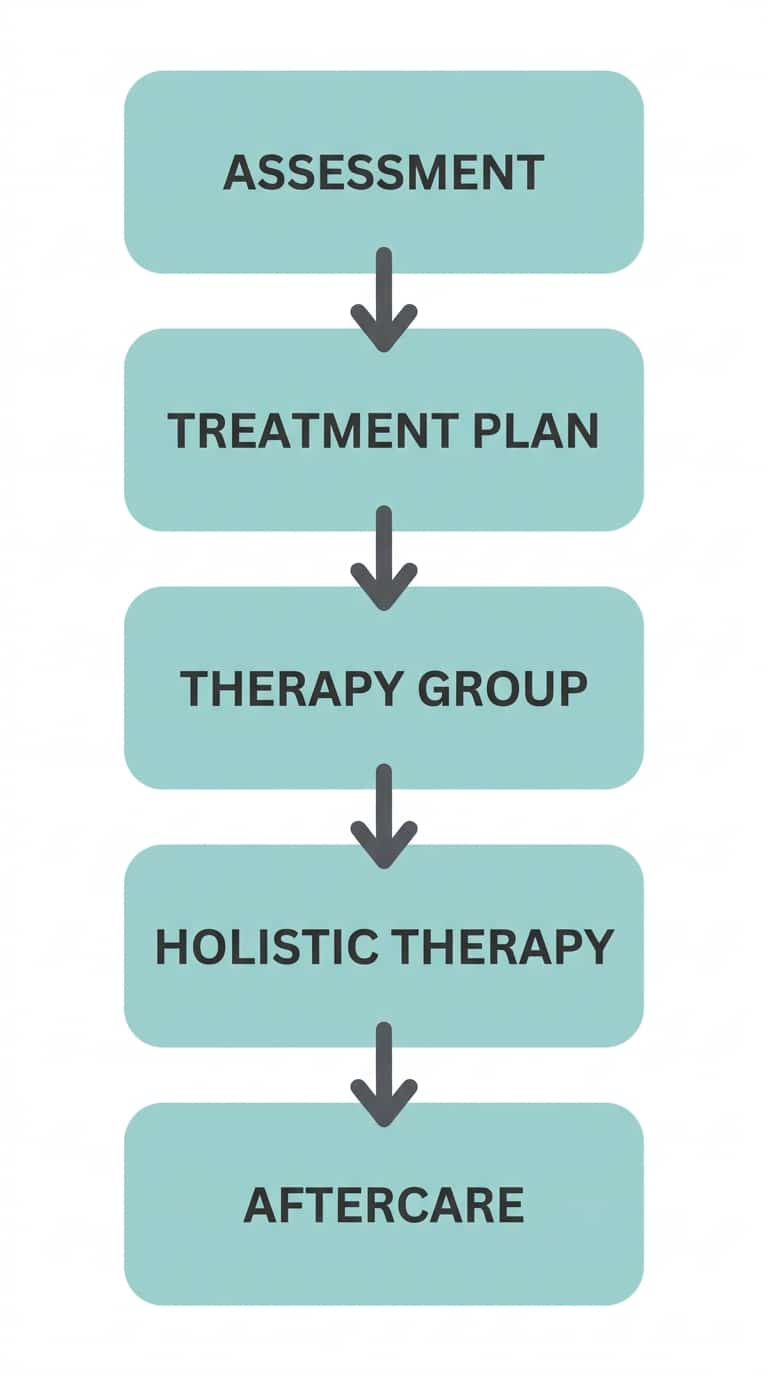
After considering costs, the next question is the time commitment. Outpatient treatment in Santa Barbara begins with a comprehensive assessment that shapes an individualized plan. We offer individual therapy, group therapy, and holistic sessions.
Ensuring Quality and Peace of Mind
Our quality in outpatient care begins at the point we’re licensed here in California as #420045AP until 03/31/2028. This enables us to check whether you have any insurance that might be paying for your visit, and also provides 24 hour confidential advice when needed. Most problems can usually be answered from the information contained in subsequent pages.
Frequently Asked Questions About Outpatient Treatment
What is DHCS certification?
The California Department of Health Care Services (DHCS) is the sole authority for certifying outpatient programs. Certification requires monitoring and two-year renewals. Providers must submit their renewal documentation 90 days prior to expiration. Some facilities, such as schools and correctional institutions may be exempt from these requirements.
Does Santa Barbara Recovery have DHCS certification?
We hold an active DHCS license (#420045AP, exp. 03/31/2028).
What insurance plans are accepted?
We accept large-scale plans like Aetna, Anthem, Beacon, Cigna, and UMR, and help you verify your insurance coverage.
Does outpatient therapy work?
Outpatient therapy can be effective when built around evidence-based practices.
Call us at (805) 429-1203 to confirm.
Quick Answers to Outpatient Treatment in Santa Barbara, California
Does outpatient therapy work
Yes, outpatient therapy can be effective when built on evidence-based practices. Santa Barbara Recovery provides individual therapy, group counseling, and relapse prevention planning rooted in established clinical methodologies. A study of a 12-month intensive outpatient program found significant improvements in family relationships by the nine-month mark.
Is outpatient rehab effective
Outpatient rehab is effective when it incorporates evidence-based methods. Santa Barbara Recovery’s program includes dialectical behavior therapy, experiential therapy, and psychiatric care to address substance use and co-occurring conditions. Research indicates structured attendance of nine hours per week over a year yields measurable clinical and social gains.
Does outpatient treatment work
Yes, outpatient treatment works when built on proven therapeutic modalities. Santa Barbara Recovery delivers dual diagnosis treatment and aftercare planning to support sustained sobriety. Studies show that long-term intensive outpatient programs with consistent sessions produce positive changes in family dynamics and overall functioning.
Does outpatient rehab work
Outpatient rehab works for many individuals, particularly when it includes structured accountability and peer support. Santa Barbara Recovery offers a men-focused program with flexible scheduling and insurance navigation. A research evaluation confirmed significant patient gains after nine months of intensive outpatient care.
Take the Next Step Toward Recovery
Call (805) 429-1203 to begin outpatient treatment in Santa Barbara; we provide confidential, 24/7 support.
Resources
- Get AB118 Certification Rules for Outpatient Drug Programs
- Find DHCS Outpatient Certification Exemptions and Renewal