






Fentanyl is a synthetic opioid 50 to 100 times stronger than morphine, and as little as two milligrams can be fatal. It is often hidden in counterfeit pills and other drugs, so many people take it unknowingly. Santa Barbara Recovery Center treats fentanyl addiction with medically supervised detox, evidence-based therapy, and relapse prevention, watching for signs like pinpoint pupils and slowed breathing.
Key Takeaways
- Watch for behavioral warning signs like increased secrecy, withdrawal from loved ones, and neglected responsibilities.
- Recognize physical indicators including extreme drowsiness, pinpoint pupils, slowed breathing, and cold, clammy skin.
- Understand that fentanyl is 50–100 times stronger than morphine, with as little as two milligrams potentially fatal.
- Assume any illicitly obtained pill or drug may contain undetectable, lethal amounts of fentanyl.
- Learn overdose signs—stopped breathing, blue lips, limpness—and administer naloxone immediately, using multiple doses if needed.
What is fentanyl and why is it so dangerous


Fentanyl is a synthetic opioid that stands out as one of the most potent, measuring roughly 50 to 100 times stronger than morphine. It binds rapidly to receptors in your brain that regulate pain and breathing, producing effects within minutes. Because of its potency, even a minuscule dose, as little as two milligrams, can prove fatal.
The primary danger lies in respiratory depression. Fentanyl suppresses your body’s drive to breathe, and as your breathing slows or stops, oxygen deprivation follows quickly. You won’t always recognize the threshold before overdose sets in.
Illicitly manufactured fentanyl frequently contaminates other drugs without your knowledge, meaning you might ingest it unknowingly. This unpredictability, combined with its strength, makes fentanyl exceptionally lethal.
What are the signs and side effects of fentanyl abuse
Fentanyl abuse shows up as changes across three domains: behavior, physical function, and cognition. Behaviorally, you’ll notice increased secrecy, deceptive patterns, withdrawal from loved ones, frequent absences, and neglected responsibilities. The signs of fentanyl use often include an obsessive focus on securing more supply. Physical fentanyl side effects include extreme drowsiness, shallow or slowed breathing, constricted “pinpoint” pupils, nausea, and cold, clammy skin. Cognitively, you’ll observe confusion, poor concentration, severe mood swings, and diminished interest in once-valued activities.
Watch closely for these emotionally significant warning signs:
- Someone you love pulling away, isolating, and abandoning relationships.
- A once-driven person neglecting work, school, and daily obligations.
- Pinpoint pupils and slowed breathing signaling immediate danger.
Early recognition saves lives.
Why does fentanyl’s potency make it so risky


Fentanyl’s extreme potency drives its danger: it’s roughly 50 to 100 times stronger than morphine, so even a minuscule dose can prove fatal. Because effective and lethal amounts differ by mere micrograms, you can’t reliably gauge a safe quantity, especially when fentanyl’s mixed into counterfeit pills or other drugs without your knowledge. This narrow margin means a fentanyl overdose can occur rapidly, suppressing your breathing before help arrives. If you’re developing opioid use disorder, rising tolerance pushes you toward larger doses, compounding overdose risk with each use. The drug’s rapid onset also leaves little time to intervene once respiratory depression begins. Understanding these factors helps you recognize why fentanyl demands immediate attention and why naloxone access and professional treatment matter so critically.
Why is fentanyl often hidden in other drugs
Fentanyl is often hidden in other drugs because it’s cheap to produce and delivers a powerful effect in tiny amounts. By cutting substances like heroin, cocaine, or counterfeit pills with fentanyl, dealers maximize profits while stretching their supply. You won’t detect it by sight, taste, or smell, which increases your risk of fentanyl abuse and accidental overdose.
| Reason for Hiding Fentanyl | Consequence for Users |
|---|---|
| Low production cost | Widespread contamination |
| Boosts potency in small amounts | Higher overdose risk |
| Mimics prescription medications | Undetectable in counterfeit pills |
You should assume that any illicitly obtained drug may contain fentanyl. Counterfeit pills pressed to resemble legitimate medications pose particular danger, since you can’t verify their contents or dosage accurately.
What should families know about overdose and naloxone
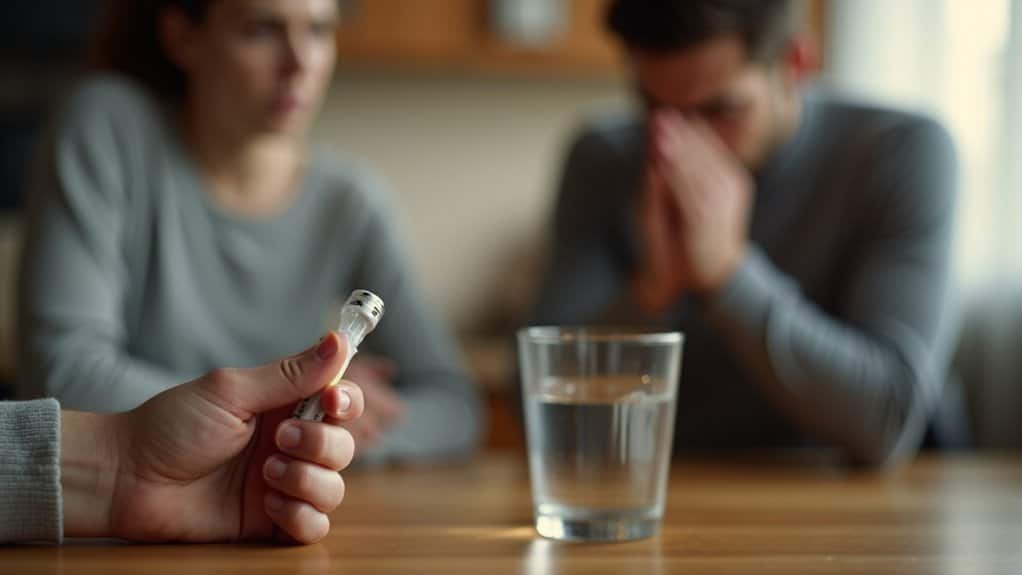
Families should know that a fentanyl overdose can happen fast, so you need to recognize the warning signs and act immediately. Watch for slowed or stopped breathing, blue-tinged lips or fingernails, complete limpness, and gurgling or choking sounds. If you observe these indicators, call emergency services and administer naloxone without delay. Symptoms of fentanyl overdose can be critical to identify quickly. Recognizing these symptoms early may save someone’s life and prevent irreversible damage. It’s essential for everyone to learn about these signs and be prepared to act swiftly in an emergency.
Naloxone is a medication that rapidly reverses opioid overdose by blocking fentanyl’s effects on the brain. It’s a critical component of overdose prevention, and you should keep it accessible at home.
- Every minute without oxygen increases the risk of permanent brain damage.
- One dose of naloxone can mean the difference between life and death.
- Your quick response could save someone you love.
Multiple doses may be necessary, since fentanyl’s potency often requires repeated administration.
How does Santa Barbara Recovery Center treat fentanyl addiction
Santa Barbara Recovery Center treats fentanyl addiction through medically supervised detox, evidence-based therapy, and structured relapse prevention. You’ll begin with medically supervised detox, where clinicians manage withdrawal symptoms safely and, when appropriate, administer medication-assisted treatment to stabilize your system. This approach reduces cravings and lowers relapse risk during the earliest, most vulnerable phase of opioid addiction recovery.
From there, you’ll move into evidence-based therapy, including cognitive behavioral therapy and individual counseling that address the psychological drivers behind your drug use. Addiction treatment here also emphasizes structured relapse prevention, teaching you to identify triggers and build coping strategies.
You’ll receive coordinated care that treats the physical, cognitive, and behavioral dimensions of fentanyl dependence, supporting sustained, measurable recovery.
Get Fentanyl Treatment at Santa Barbara Recovery Center
If you’re recognizing these signs in someone you love, the next step is a plan, not just worry. At Santa Barbara Recovery Center, our fentanyl addiction treatment begins with medically supervised detox that manages withdrawal safely and includes naloxone access, then moves into individual therapy and relapse-prevention planning that address the drivers behind continued use. Because fentanyl works as a synthetic opioid and often sits alongside anxiety or depression, we screen for co-occurring conditions through dual diagnosis treatment and build your plan around what you’re actually facing. Call (805) 429-1203 to talk with our team, or verify your insurance to see what your coverage includes.
Frequently Asked Questions
How Long Does Fentanyl Stay in Your System?
Fentanyl typically clears your bloodstream within 12 hours, but detection windows vary by test type. You’ll test positive in urine for 24 to 72 hours after your last use. Saliva tests detect it for 1 to 3 days, while hair follicle testing reveals use for up to 90 days. Your metabolism, dosage, frequency of use, and organ function all influence how long it’ll remain detectable in your system.
Can Fentanyl Addiction Be Treated With Medication-Assisted Therapy?
Yes, you can treat fentanyl addiction with medication-assisted therapy (MAT). Clinicians typically prescribe buprenorphine, methadone, or naltrexone to reduce cravings and manage withdrawal symptoms. These medications stabilize brain chemistry, letting you focus on recovery. You’ll get the best outcomes when MAT’s combined with counseling and behavioral therapies. If you or a loved one’s struggling, consult a licensed treatment provider to determine which evidence-based approach fits your specific situation.
What Insurance Options Cover Fentanyl Addiction Treatment?
You’ve got several insurance options for fentanyl addiction treatment. Most private health plans cover medication-assisted therapy, counseling, and inpatient or outpatient rehabilitation, often under mental health and substance use benefits. If you’re eligible, Medicaid and Medicare also cover these services. Check your specific plan’s coverage details, including copays, deductibles, and in-network providers. You can contact your insurer directly or ask the treatment facility to verify your benefits before starting care.
How Can I Approach a Loved One About Their Addiction?
Choose a calm, private moment when they’re not intoxicated or in withdrawal. Express concern using specific observations rather than accusations—describe the drowsiness, secrecy, or withdrawal you’ve witnessed. Use “I” statements to reduce defensiveness, and avoid judgment or ultimatums initially. Listen actively, and prepare treatment resources beforehand so you’re ready if they’re receptive. Expect denial, and don’t force resolution in one conversation. Stay supportive, set boundaries, and follow up consistently.
What Is the Success Rate for Fentanyl Addiction Recovery?
Recovery success varies, and you shouldn’t expect a single fixed number. Studies show relapse rates for opioid addiction range from 40% to 60%, which reflects fentanyl’s chronic, relapsing nature. You’ll see markedly better outcomes when your loved one combines medication-assisted treatment, like buprenorphine or methadone, with counseling and sustained support. Long-term engagement improves prognosis, so don’t view relapse as failure—it’s often part of the recovery process, not the end.